Table of Contents
- Introduction
- Why Budgeting Still Matters in 2025
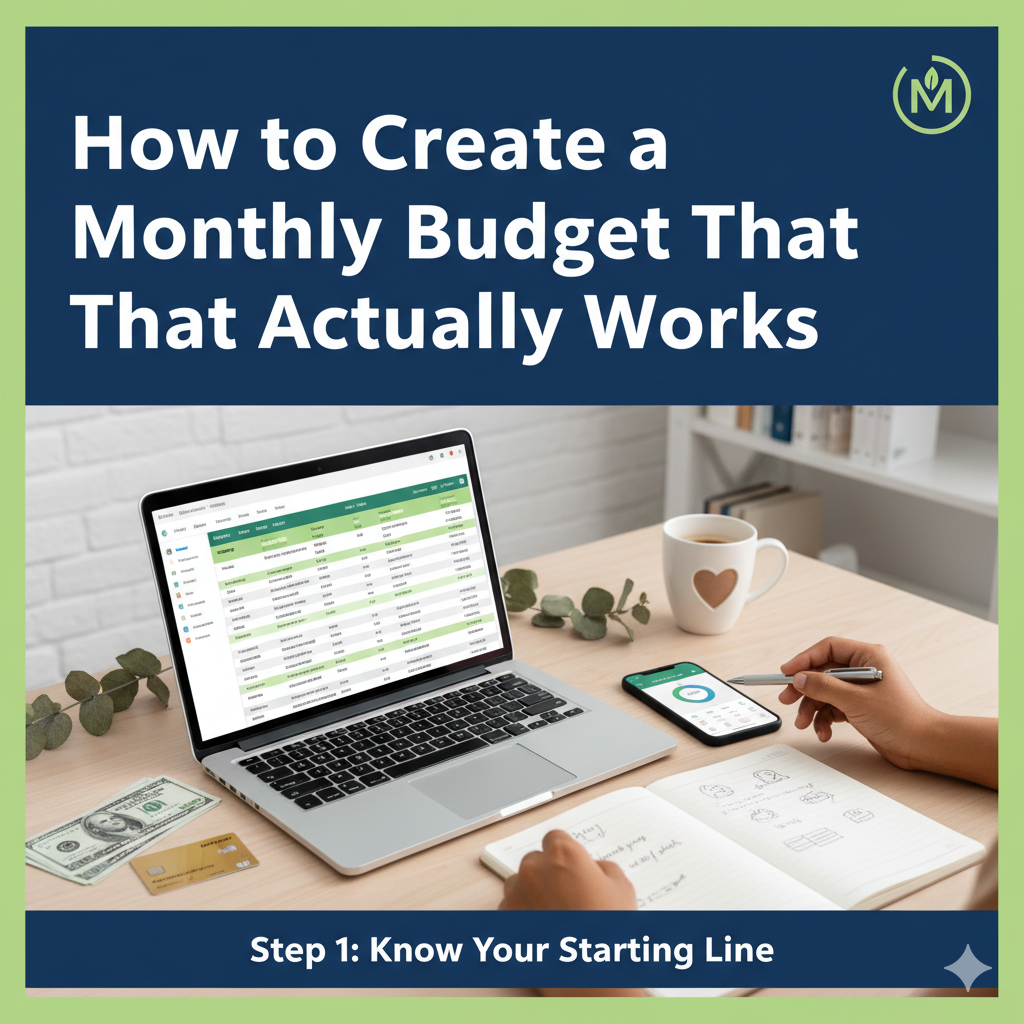
- Step 1: Track Every Dollar You Earn and Spend
- Step 2: Set Clear and Realistic Financial Goals
- Step 3: Choose the Right Budgeting Method
- Step 4: Build a Flexible Monthly Budget Template (Example)
- Step 5: Automate and Simplify Your Finances
- Step 6: Adjust, Review, and Stay Accountable
- Free Tools to Help You Budget Smarter
- Common Budgeting Mistakes to Avoid
- Conclusion
- FAQs
Introduction
If your money always seems to disappear before the month ends, you’re not alone.
Most Americans struggle to manage day-to-day expenses — not because they earn too little, but because they don’t track where their money goes.
Creating a monthly budget that actually works isn’t about restriction — it’s about freedom.
It gives you control over your money, helps you crush debt, and builds a foundation for financial independence.
In this guide, you’ll learn how to design a simple, effective monthly budget for 2025 using proven frameworks like the 50/30/20 rule, real examples, and free budgeting tools.
Why Budgeting Still Matters in 2025
Despite new digital payment tools, credit cards, and fintech apps, the budgeting challenge remains the same: people spend without awareness.
According to a 2024 Forbes Advisor survey, over 60% of U.S. adults live paycheck to paycheck, even with above-average incomes.
That’s because convenience often kills financial mindfulness.
A working budget helps you:
- Track your cash flow in real-time
- Avoid debt traps and overspending
- Build emergency savings
- Plan for long-term goals like retirement or homeownership
In 2025, budgeting isn’t optional — it’s your financial survival skill.
Step 1: Track Every Dollar You Earn and Spend
Before creating a budget, you need to know your financial baseline — how much comes in and where it goes.
🔹 How to Track Expenses Effectively
- List all income sources: salary, side hustles, freelance work, etc.
- Collect your last 2–3 months of data: bank statements, credit card history, bills.
- Group your spending: groceries, utilities, transport, entertainment, etc.
💡 Pro Tip: Use Google Sheets or a free app like Mint, YNAB (You Need a Budget), or EveryDollar to automate expense tracking.
Step 2: Set Clear and Realistic Financial Goals
Budgeting without goals is like driving without a map.
Ask yourself:
- What do I want my money to do this year?
- Am I saving for a car, emergency fund, or debt-free life?
🎯 SMART Goal Framework
- Specific: “Save $3,000 for emergency fund.”
- Measurable: “Set aside $250/month.”
- Achievable: Matches your income.
- Relevant: Supports your priorities.
- Time-bound: “By December 2025.”
Every good budget aligns with these goals.
Step 3: Choose the Right Budgeting Method
There’s no one-size-fits-all system — the right method depends on your lifestyle.
Let’s look at three proven options.
The 50/30/20 Rule (Template)
This simple rule, popularized by Senator Elizabeth Warren, divides your after-tax income into three categories:
| Category | Percentage | Description | Example (Monthly Income: $4,000) |
|---|---|---|---|
| Needs | 50% | Essentials: rent, groceries, utilities, insurance | $2,000 |
| Wants | 30% | Lifestyle: dining, entertainment, travel | $1,200 |
| Savings/Debt | 20% | Savings, debt payments, investments | $800 |
This method is ideal for beginners who want flexibility without micromanaging every dollar.
Zero-Based Budgeting
A zero-based budget assigns every dollar a job — your income minus expenses equals zero.
Example:
If you earn $4,000, you plan exactly how that $4,000 is spent, saved, or invested. Nothing is left unaccounted for.
Great for: disciplined savers and people working to pay off debt.
Envelope or Digital Envelope System
The classic cash envelope method now has digital twins in apps like Goodbudget and YNAB.
You allocate funds into “envelopes” (categories) — once an envelope is empty, you stop spending.
This system builds awareness and prevents emotional spending.
Step 4: Build a Flexible Monthly Budget Template (Example)
Here’s a sample budgeting template for a $4,000 monthly take-home income.
You can adjust it to your own numbers.
| Category | Budgeted % | Budgeted Amount | Notes |
|---|---|---|---|
| Housing | 30% | $1,200 | Rent or mortgage |
| Utilities & Bills | 10% | $400 | Electricity, water, internet |
| Groceries | 10% | $400 | Household essentials |
| Transportation | 10% | $400 | Gas, maintenance, insurance |
| Debt Payments | 10% | $400 | Credit cards, loans |
| Savings & Investments | 15% | $600 | Emergency fund, IRA |
| Entertainment & Dining | 10% | $400 | Eating out, streaming |
| Miscellaneous | 5% | $200 | Gifts, unexpected costs |
👉 Tip: Keep 3–5% flexibility each month for irregular expenses.
Step 5: Automate and Simplify Your Finances
Automation removes the temptation to spend what you should save.
🔧 Simple Automation Strategy:
- Set up direct deposits for bills and savings.
- Use apps like Empower, Rocket Money, or Truebill to manage subscriptions.
- Schedule bill reminders to avoid late fees.
Consistency beats willpower when managing money.
Step 6: Adjust, Review, and Stay Accountable
A “set it and forget it” budget doesn’t work.
Your budget should evolve with your life — job changes, rent increases, or new goals.
🔁 Monthly Review Checklist:
- Compare planned vs. actual spending.
- Identify overspending patterns.
- Adjust percentages or categories as needed.
- Celebrate small wins — staying consistent is success.
💬 Expert Insight: ExposureNinja advises reviewing your budget every 30 days to keep it realistic and stress-free.
Free Tools to Help You Budget Smarter
Here are a few free (or freemium) budgeting tools worth trying in 2025:
| Tool | Best For | Key Feature |
|---|---|---|
| Mint | Beginners | Auto categorizes transactions |
| YNAB (Free Trial) | Serious planners | Zero-based budgeting |
| Google Sheets Template | Manual trackers | Customizable and free |
| Empower (Personal Capital) | Investors | Tracks net worth and investments |
| Goodbudget | Couples or families | Digital envelope system |
Common Budgeting Mistakes to Avoid
Even the best budget fails if you make these mistakes:
❌ Ignoring irregular expenses (like car repairs)
❌ Setting unrealistic goals
❌ Tracking inconsistently
❌ Forgetting to reward yourself
Budgeting success isn’t about perfection — it’s about consistency and self-awareness.
Conclusion
Creating a monthly budget that actually works isn’t about restricting your life — it’s about directing your money with purpose.
When you track spending, set goals, use the right method, and stay consistent, you’ll find yourself saving more, stressing less, and moving closer to financial freedom every month.
👉 Start today — open a spreadsheet, set your priorities, and take the first small step.
Your future self will thank you.
FAQs
1. What’s the easiest budgeting method for beginners?
The 50/30/20 rule is the easiest because it’s simple to follow and flexible. You just divide your income into needs (50%), wants (30%), and savings (20%).
2. How often should I update my budget?
Review it monthly. If your income or expenses change, make adjustments immediately.
3. What’s the best free tool for budgeting?
Google Sheets or Mint are perfect for beginners. Both are free, easy to use, and mobile-friendly.
4. Can I budget with an irregular income?
Yes — use your average income from the last 3–6 months as a baseline. Prioritize essentials and build a small buffer for slow months.
5. How do I stay consistent with my budget?
Set reminders, use automation, and review your progress weekly. Tracking small wins keeps you motivated.
Internal Linking Suggestions:
- How to Build a 6-Month Emergency Fund Without Stress
- 10 Smart Ways to Save Money Even on a Low Income
- The 50/30/20 Budget Rule Explained for Beginners